
Is topping cannabis worth the risk, or could it ruin a perfectly good plant? Growers have debated this for years, especially those just getting started or transitioning from seeds to clones.
Some swear by the method, claiming it doubles their yields and transforms lanky stems into bud-packed bushes. Others avoid it, worried they’ll stress their plants or stunt growth entirely.
However, the truth lies in timing, technique, and plant genetics. When done right, topping can be one of the most powerful tools in your grower toolkit.
Let’s break down what topping is, how it works, and how to use it to grow bigger, better cannabis.
What Is Topping?
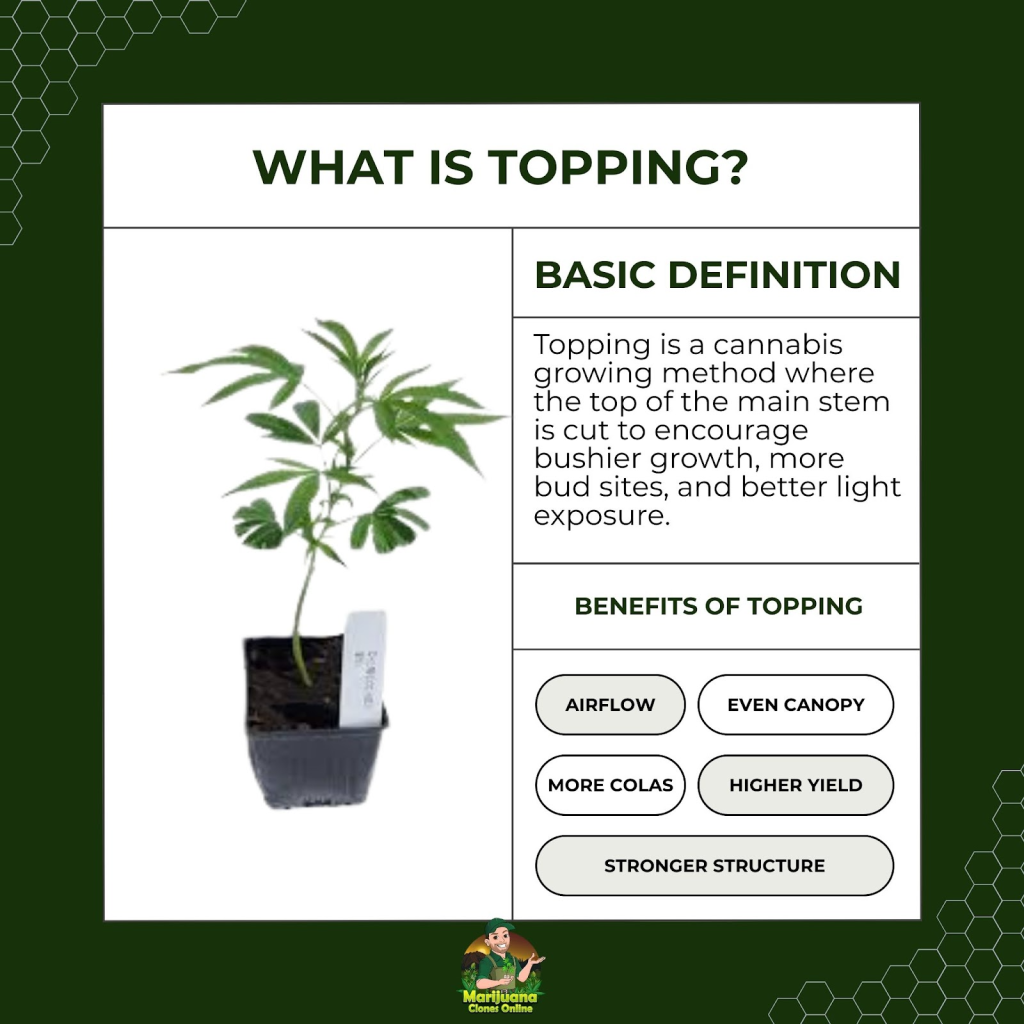
Not to be confused with cannabis cloning, topping is a strategic growing technique that changes the way a cannabis plant grows. Instead of allowing one main stalk to shoot upward and dominate the structure, topping encourages the plant to spread its energy across multiple branches. This creates a wider, bushier shape that supports better light distribution and improved airflow throughout the canopy.
By cutting off the top growth tip, growers interrupt the plant’s natural preference to prioritize one central cola. This process is known as disrupting apical dominance. Once that top is removed, hormones redistribute and activate growth in the surrounding nodes. Within days, two new growth tips emerge where one once existed, setting the stage for additional colas and increased bud sites.
A plant that has not been topped typically grows in a conical pattern. The main cola becomes bulky and tall, while lower branches often remain shaded and underdeveloped.
This structure works in open outdoor environments, but indoor grow spaces demand a more even canopy. Topping provides that balance and encourages the plant to grow out instead of up.
Benefits of Topping Cannabis Plants
Topping provides growers with a reliable way to shape and optimize their plants for stronger growth, better structure, and improved performance. This technique redirects energy throughout the plant, helping it thrive in both indoor and outdoor environments.
Although results depend on timing, strain, and setup, topping consistently rewards growers who apply it correctly.
Here are the benefits of topping cannabis plants:
Increased Bud Sites for Higher Yields
Each time a plant is topped, its growth is redirected into two or more new shoots. These develop into main colas and multiply the number of productive flower sites. The lateral branches receive more energy and grow stronger, allowing them to take full advantage of available light.
Growers using strong branching genetics often see faster recovery and better results.
Even Canopy for Balanced Development
Topping removes the plant’s central leader and promotes a flat, uniform canopy. Instead of allowing one tall cola to dominate, the structure shifts to support equal development across the entire plant. This leads to better use of lighting and space, especially indoors.
Balanced canopies create more predictable outcomes. Each bud receives similar intensity and duration of light, which results in more consistent density and maturity by harvest.
Improved Airflow and Disease Prevention
Plants with tight, vertical growth often trap moisture between branches and leaves. That environment creates the conditions for mold, mildew, and pest problems. Topping encourages an open structure where air can move freely throughout the canopy.
Greater airflow supports healthy transpiration and helps prevent the types of issues that delay or compromise flowering. It also allows the grower to monitor the entire plant more easily.
Height Management in Indoor Grows
Indoor grow spaces often place strict limits on how tall a plant can grow. Topping controls that height of your cannabis clones and encourages lateral growth instead. A wider footprint supports more colas under the lights and reduces the risk of light burn or heat stress near the canopy.
This method works especially well in short tents or rooms where growers need to keep the canopy level and accessible. The differences between indica vs sativa plants also comes into play, as sativas typically stretch upward more than indica plants, so you’ll absolutely want to consistently top your sativa plants to avoid them getting unmanageably tall in your tent.
Stronger Branches That Carry More Weight
Removing the top causes the plant to thicken its stalks and build stronger internal support. Those reinforced branches can carry more weight during late flower and resist bending or snapping under heavy colas.
Plants trained in the early stages often finish with a naturally supportive structure. This strength reduces the need for plant ties or external supports during flowering.
When Is the Best Time to Top Cannabis Plants?
Timing shapes the outcome. A plant that is topped too early may stall. And one that is topped too late may not have enough time to respond. So, the best time to top a cannabis plant is when it has enough structure to recover and enough time to redirect growth before flowering begins.
After the Fourth or Fifth Node
Topping works best when the plant has four to five healthy nodes. These are pairs of leaves with small branches forming between them. This stage means the root system is active and the plant has entered a stable rhythm of vegetative growth.
Node count is more reliable than height when deciding when to top.
Cutting too early can lead to stunted growth or slow recovery. Waiting too long increases the risk of irregular branching or wasted vertical stretch.
Once Clones Have Rooted and Stabilized
Cannabis clones require a period of adjustment after transplanting. Topping should only begin once they show active vertical growth and visible node spacing. Leaves should be reaching upward and branching should feel firm.
Our team at Marijuana Clones Online prepares all cuts in a sterile environment and encourages topping only once the plant has clearly settled in. Many of our cannabis teens come topped at least once to start the process for you and keep the size manageable for shipping purposes, which begins the branching process early. These cuts simulate the effects of topping and guide the plant into lateral development from the start.
Before the Flowering Transition Begins
Topping belongs in the vegetative phase, not in flower. Vegetative plants have time to recover, rebuild, and push out new growth. That process helps set up the canopy for strong flowering later.
Topping too close to the flowering switch can disrupt hormonal balance. Energy that would go into bud formation gets pulled into recovery instead. The result is often reduced yield and uneven bud sites.
A safe guideline is to top no later than one to two weeks before switching to a flowering light cycle. This ensures the plant has time to rebound and form new growth tips.
Based on the Growing Environment and Region
Growers working outdoors often make timing decisions based on the season. Many begin topping in late spring, after the plant has adapted to its environment and developed strong early growth.
Large outdoor setups like greenhouses or hoop houses benefit from tall topping. This approach involves waiting for the plant to form twelve or more nodes before removing the top. The goal is to manage height before the canopy approaches overhead space or lighting systems.
Indoor growers can rely on structure rather than season. Node count, plant vigor, and overall size guide timing more accurately in controlled environments.
How to Top Cannabis Plants Step-by-Step

Topping requires precision, timing, and a calm approach. The process is simple, but the impact it has on plant structure and yield is significant. A clean cut made at the right point in the growth cycle will redirect energy, strengthen lateral development, and set the foundation for a fuller canopy.
Tools You Need
Reliable tools reduce the chance of damaging the plant or introducing pathogens. Always start with clean, sharp instruments.
- Pruning shears, small scissors, or a sterile razor blade
- Isopropyl alcohol and a clean cloth for sterilizing blades
- Soft ties or plant training clips, if needed, for shaping new growth
- Clean hands and a stable environment to avoid introducing stress
The following steps will walk you through the exact method you should use to top your cannabis plants.
Step 1: Choose the Right Plant Stage
Only top a cannabis plant once it has four to five strong nodes. These nodes are the points where leaves and branches grow from the stem. A plant at this stage has developed a solid root base and can handle the recovery process.
If you’re working with a clone, make sure it has taken root and shows signs of healthy vertical growth before topping. The leaves should be reaching up, and new nodes should be stacking. Brush up on your weed plant stages knowledge here before topping your poants.
Step 2: Identify the Growth Tip You Want to Remove
Find the newest vertical shoot at the top of the plant. This is the main growing point, also called the apical tip. Directly below it, you will see the most recent node with a pair of fan leaves on either side.
The spot for the cut is just above this node. That node will become the site for your two new main branches.
Step 3: Make a Clean Cut Above the Node
Use sharp, sterile scissors or a clean razor blade. Cut straight across the main stem just above the node you identified. The cut should be clean and even. And avoid leaving a jagged edge or slicing into the node itself.
This cut removes the apical tip and signals the plant to redirect energy to the branches below. Within a few days, two new shoots will start growing from the node just beneath the cut.
Step 4: Let the Plant Recover and Observe Growth
After topping, the plant may pause for one or two days as it adjusts. Keep your environment stable during this time. Avoid transplanting, overfeeding, or making additional cuts until the plant shows fresh new growth.
You will soon see two new shoots forming from the node where you topped. These will grow into your new main colas. They should remain even in height and push out strong branches if the plant receives proper light.
Step 5: Support and Shape as Needed
As new branches form, gently train them outward using soft plant ties or stakes if they begin to crowd each other. This allows better airflow and helps form a flat canopy. Do not tie anything too tightly. Keep movement gentle to avoid damaging stems.
If additional toppings are planned, wait until each new branch develops at least three to four nodes of its own. Then repeat the same topping process on those new tips to multiply the branching again.
Topping vs. Fimming vs. LST: What’s the Difference?
Training methods all aim to shape cannabis plants for better light exposure, airflow, and yield, but they do it in different ways.
Topping involves cutting off the main stem above a node. This forces the plant to redirect growth hormones into the branches below, which creates two new main colas instead of one. The canopy flattens, the structure spreads out, and the plant grows bushier.
This method is ideal for growers who want to multiply bud sites, reduce height, and produce symmetrical plants.
Fimming is similar to topping, but instead of cutting below the newest node, the grower trims about 75 percent of the growth tip. The goal is to leave part of the shoot intact. This often causes the plant to grow three or four new tips instead of two, though results can be inconsistent.
Low-stress training, or LST, is a technique that bends branches gently rather than cutting them. This method encourages the plant to grow sideways, opening up lower branches to direct light and helping form a more even canopy. LST works well when paired with topping because it gives the grower control over both vertical and horizontal structure.
Troubleshooting Common Topping Mistakes
Topping works best when timing, tools, and plant readiness align. Even experienced growers occasionally run into issues that can slow growth or reduce yield.
- Topping Too Early. Plants topped before the fourth node often struggle to recover. The root system may not be strong enough to support lateral growth, which can lead to stunted development. Always wait until the plant has at least four to five solid nodes before making the cut.
- Topping Too Late. Plants topped too far into veg, or close to the flowering switch, may not have enough time to redirect growth. This can result in uneven bud development and slower flowering. Allow at least one to two weeks of vegetative time after topping before flipping to flower.
- Cutting in the Wrong Spot. A cut made too low or too high can harm the plant or delay growth. Always cut just above a node, not through it. Avoid leaving long stem stubs above the node, which can attract pests or trap moisture.
- Jagged or Unclean Cuts. Tearing the stem or using dull blades creates stress. Make a smooth, clean cut with sterilized scissors or a sharp razor blade. This allows the plant to heal quickly and push out new growth without complications.
- Slow Recovery or Stall After Topping. Some growers notice their plant seems to pause after topping. This is normal for one to two days. If the stall continues longer, check environmental conditions. Make sure temperature, humidity, and watering are stable.
- Uneven Canopy Formation. A plant that grows lopsided after topping may need light training. Use soft ties to guide branches outward and level the canopy. Topping again once new shoots have several nodes can help even out the structure.
- Topping Clones Before They Root. Clones must be fully rooted and stable before topping. Cutting too early puts unnecessary stress on a plant that is still adjusting. Always confirm strong upward growth and healthy leaf development before making any training cuts. You also should not be topping autoflower plants because they stay relatively short. You can learn more about photoperiod vs autoflower here.
- Topping Every Node on the Same Plant. This can overwhelm the plant. So, always allow time between toppings for the plant to recover and support the next phase of growth.
Should You Top Your Cannabis Plants?
Topping is one of the most impactful techniques a grower can use to guide structure, boost yield, and create a more efficient canopy. A simple cut reshapes the entire plant, allowing light to reach more bud sites, improving airflow, and preparing the plant to support dense, balanced colas.
This method rewards those who understand timing and genetics. Topping a healthy, stable cannabis plant with four or five nodes leads to stronger branching, better light distribution, and a more manageable shape. When paired with clones that have been bred for structure and vigor, the results speak for themselves.
Get Clones That Respond Perfectly to Topping
Marijuana Clones Online gives you access to the kind of genetics that perform exceptionally well under training. Each phenohunted clone is selected for its branching potential, structural strength, and ability to thrive under pressure.
These are not average cuts. These are clean, elite genetics, built for performance and shipped with care.
Tap into our exclusive lineup of premium genetics for your next grow today!