Indoor weed offers more control and consistency, often resulting in higher THC levels and bag appeal. Outdoor weed, on the other hand, delivers better flavor, higher yields, and lower costs. However, the best choice depends on your goals, space, and budget.
So, how do these differences actually impact the quality, consistency, and cost of your cannabis grow, and which method is best for your setup?
Let’s find out.
What Is Indoor and Outdoor Weed?
Indoor weed is cannabis cultivated in a controlled environment using artificial lighting, ventilation, and grow systems like soil or hydroponics. It allows the grower to fine-tune every variable, light spectrum, temperature, humidity, CO₂ levels, to push the plant’s genetics to its full potential.
Outdoor weed is grown under natural sunlight in open-air environments such as gardens, backyards, or farmland. These plants rely on seasonal changes and regional climate. They tap into full-spectrum sunlight and native soil conditions to express their traits naturally.
Both methods can produce excellent cannabis. The real difference lies in the level of control you have and the consistency you can expect.

Indoor vs Outdoor Weed: Key Differences You Should Know
This is where the choice really begins to matter. As someone who has seen what elite genetics can do in both environments, I can tell you that while both styles can produce amazing cannabis, they shape the outcome in very different ways. Let’s break it down.
Appearance & Structure
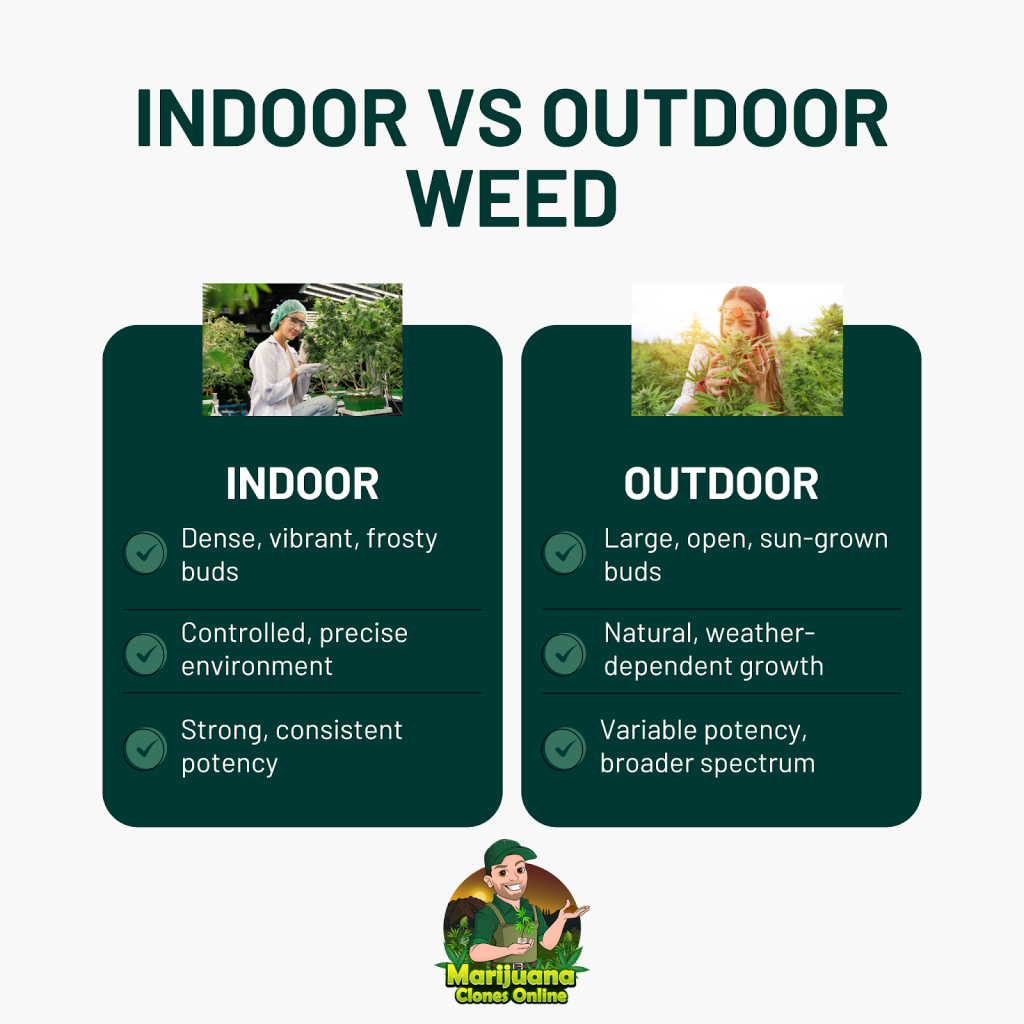
Indoor cannabis typically features dense, compact buds with vivid trichome coverage and vibrant coloration. Controlled lighting and airflow lead to tighter internodal spacing and thinner stems. These traits often give indoor flower a clean, uniform look that commands higher prices in dispensaries.
Outdoor cannabis tends to develop larger, more open buds with a looser structure. Exposure to wind, rain, and fluctuating temperatures creates thicker stems and darker foliage. The buds may appear leafier and less polished, but this doesn’t necessarily reflect lower quality. In fact, some of the best-tasting flower comes from sun-grown plants that look less refined.
Flavor & Aroma
Outdoor cannabis often delivers deeper, richer flavor profiles that reflect the environment in which it was grown. Exposure to natural sunlight, native soil, and fresh air brings out complex terpene layers, a phenomenon known as terroir. These plants absorb subtle cues from their surroundings, which can create standout aromas that are harder to replicate indoors.
Indoor cannabis typically presents a cleaner, more focused flavor. Controlled feeding schedules and isolated environments help preserve delicate terpenes like limonene or myrcene, especially when paired with proper drying and curing. The result is often sharp, dialed-in aroma, but with less environmental variation.
Some outdoor buds can carry an earthy, grassy note if not dried and cured properly. This often comes from moisture retention or dense leaf coverage. Ensuring slow drying and extended curing is essential to avoid that “hay” smell. Indoor setups, with their tighter humidity and airflow control, make this process easier to dial in, leading to a more predictable outcome for growers who want their flower to smell as dank as it looks.
Potency & Cannabinoid Content
Indoor cannabis is often associated with higher THC percentages. Controlled lighting schedules, optimized feeding regimens, and consistent environmental conditions allow plants to focus energy on cannabinoid production. Strains grown in these environments routinely test in the upper 20s and low 30s for THC, especially when sourced from elite phenohunted cuts.
Outdoor cannabis can still be potent, but cannabinoid levels are more likely to fluctuate. Weather shifts, pests, and limited control over nutrient absorption can reduce overall cannabinoid expression. That said, outdoor plants sometimes offer a broader cannabinoid spectrum, which can contribute to a stronger entourage effect. For medical users seeking specific effects beyond THC, this diversity can be a benefit.
While lab tests often show higher numbers from indoor flower, that doesn’t mean outdoor is weaker. It means indoor growers have the tools to push genetics further, and for those using premium clones already tested for potency, the results speak for themselves.
Environmental Control & Grow Conditions
Indoor cultivation gives growers full authority over every aspect of the grow environment. Lighting intensity, temperature swings, humidity levels, CO₂ enrichment, and airflow can all be tailored to each strain’s exact needs. This level of control leads to repeatable results, ideal for commercial growers and those who require consistent outcomes crop after crop.
Outdoor growing relies on the natural climate. While sunlight offers unmatched spectrum coverage, growers must work around heat waves, cold snaps, heavy rain, wind, and humidity. These variables can shift quickly and cause stress that affects growth, yield, and even survival. In regions with ideal climates, such as parts of California or Oregon, outdoor growing can still deliver premium results, but it’s always subject to nature’s unpredictability.
Indoor systems can also automate environmental factors like vapor pressure deficit, reducing manual labor while enhancing plant performance. For growers using sterile, tissue culture clones or pest-treated genetics, a stable indoor setting maximizes the benefits of those clean starts. Outdoor grows, by contrast, expose even the healthiest plants to more risk.
Yield Potential
Outdoor cannabis plants can reach impressive sizes, sometimes stretching over six feet tall and producing several pounds per plant. Access to unlimited root space, full-spectrum sunlight, and longer vegetative periods allows for massive biomass and canopy development. For growers with the space and a suitable climate, outdoor cultivation offers the highest yield potential per plant.
Indoor grows usually produce smaller plants, limited by container size and ceiling height. However, indoor setups allow multiple harvests per year, thanks to controlled light cycles and faster turnover. While yield per plant may be lower indoors, total annual output can rival or exceed outdoor harvests when run on a consistent cycle.
Light deprivation methods used in greenhouses blend both approaches. These hybrid setups use sunlight and blackout techniques to control flowering, often delivering yields close to outdoor volume with quality closer to indoor flower. This makes them a strong option for growers who want scale without sacrificing too much control.
Pest, Mold & Contamination Risks
Outdoor cannabis is exposed to a wide range of environmental threats that can compromise both yield and quality. Pests like caterpillars, aphids, and spider mites are common, along with mold issues brought on by morning dew, rain, and high humidity. Without strong preventive measures, a healthy outdoor crop can turn problematic fast.
Mold is a frequent concern, especially close to harvest. Thick buds combined with moisture and limited airflow create the perfect conditions for botrytis, or bud rot. Some growers attempt to combat this with aggressive pruning and constant monitoring, but even then, weather can turn a good grow into a loss overnight.
Indoor environments offer far greater protection. Sealed rooms, filtered air intake, and routine sanitation minimize the chance of infestation or mold. Clones that are sulfur-treated and lab-clean thrive in these setups, where variables like humidity and airflow can be dialed in with precision. This makes indoor cultivation ideal for growers who want to avoid the uncertainty of pests or contamination entirely.
Outdoor cultivators can still succeed by selecting strong genetics, following organic pest management routines, and monitoring closely. However, the margin for error is far narrower once nature is in charge.
Control, Customization & Consistency
Indoor growing provides full control over nearly every input. Light spectrum, feeding schedules, airflow, humidity, and even CO₂ levels can be fine-tuned to suit each strain. This level of precision gives growers the power to manipulate flower structure, cannabinoid content, and terpene expression. When growing high-end clones sourced from breeder cuts, this customization ensures genetic potential is fully realized.
Indoor setups also support advanced training techniques. Low-stress training, topping, super cropping, and even scrogging can be applied with predictable outcomes. Phenotype isolation becomes possible in this environment, giving growers more opportunity to refine traits across multiple runs.
Consistency is where indoor truly shines. Every harvest can mirror the last when variables stay locked in. This reliability is critical for commercial operations and home growers who rely on repeatable results. Indoor growers can even stagger harvests to maintain steady inventory throughout the year, something outdoor growers cannot match due to seasonal limitations.
Outdoor growing trades consistency for character. Plants take on traits from the land and climate, but this also means unpredictable changes in aroma, structure, or potency. While some find charm in the variability of sun-grown flower, others prefer the repeatability that only indoor can deliver.
So, Which One Should You Choose?

Choose Indoor If You:
- Need control, consistency, and discretion.
- Want year-round grows.
- Have space constraints or need tight, potent buds.
Choose Outdoor If You:
- Want higher yields for lower cost.
- Prioritize flavor, aroma, and sustainability.
- Have good weather, space, and pest control options.
Want to grow elite indoor or outdoor genetics that are phenohunted, pest-free, and proven to produce?